

Crying is part of everyday life with a newborn. It can be tiring, confusing, and sometimes worrying, especially when it lasts for a long time. However, a healthy baby can cry 2 to 3 hours a day, with a peak around 6 weeks, before the crying gradually decreases.
The main thing is to understand that a baby does not cry out of spite. Crying is their way of signaling that they need something: food, sleep, a diaper change, to be less warm, reassurance, or simply to be held.
Here are 5 simple things you can do to help them calm down.
Why does the baby cry?
Before trying to soothe them, start by checking the simplest causes.
A baby may cry because they:
- are hungry;
- are sleepy;
- are too warm;
- are in pain somewhere;
- have a full diaper.
These checks can sometimes quickly resolve the situation.
But sometimes, the baby simply needs comfort, closeness, and security.
Should you let the baby cry?
The idea that you should let the baby cry so they learn to calm themselves is a misconception.
Responding quickly and calmly to their crying helps reassure them and can even make it easier to soothe them when you intervene at the first signs.
With a baby, contact, the parent's voice, and their presence therefore play an important role.
1. Hold the baby close to you
The first thing to do is also the simplest: hold the baby close to you.
Gently wrap them in your arms and keep them close to your chest.
This closeness can help them feel safe and provide the comfort they need.
It is not always necessary to look for a complicated solution: sometimes, the baby simply wants to regain a feeling of warmth and closeness.
2. Create a calm environment with soft lighting
An environment that is too bright or overstimulating can make it harder to calm down.
Try to:
- dim the lights;
- reduce noise;
- limit stimulation;
- speak softly.
A calmer space allows the baby to gradually relax.
This can be particularly useful at the end of the day, when fatigue builds up.
3. Sing them a song softly
A parent's voice is familiar and reassuring.
You can sing a song, hum, or simply speak softly to them.
You do not need to sing perfectly: what matters most is the calm, repetitive, and reassuring tone.
This little ritual can become a cue for the baby during crying or falling asleep.
4. Rock them, massage them, or practice skin-to-skin contact
Several other things you can do to provide comfort:
- rock the baby gently;
- massage them;
- stroke them;
- practice skin-to-skin contact when they are still very young.
The goal is to favor slow and regular movements.
Skin-to-skin contact, in particular, allows the baby to regain the warmth, scent, and closeness of their parent.
5. Try the forearm position
How to position the baby?
This position involves placing the baby face down on your forearm:
- their head in the crook of your elbow;
- their body along your forearm;
- your hand placed between their legs to hold them properly.
This position is often soothing for very young babies and can also help when the baby seems to have a tummy ache.
Always maintain a secure and stable hold.
Can a walk calm the baby?
Yes, movement can also help soothe them.
A short walk, a few steps around the house, or a trip in the stroller can help some babies calm down.
Moving with the baby or taking them for a walk is one of the recommended ways to soothe them.
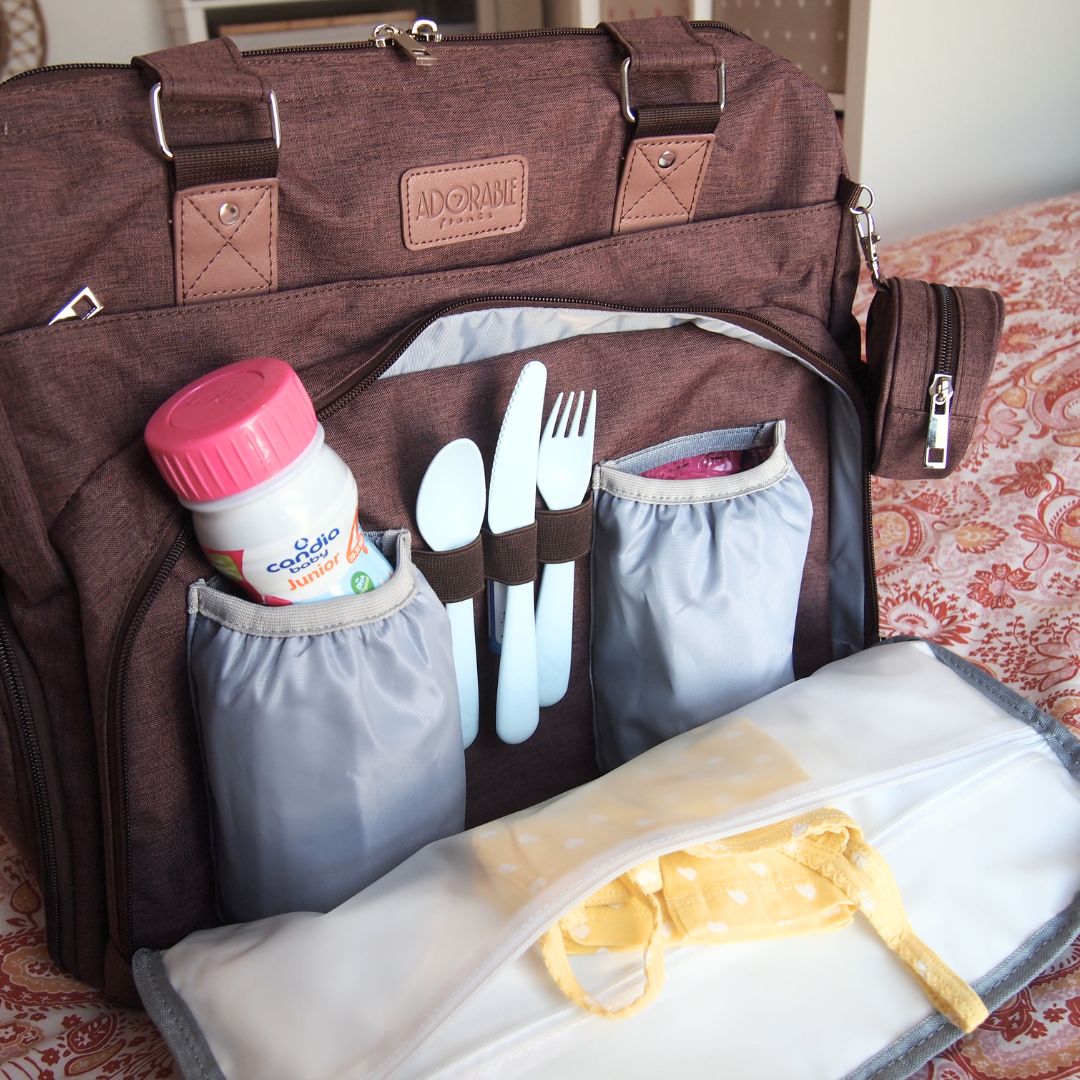
For an outing, a diaper bag worn on the back can be practical for keeping your hands free with the stroller or for carrying the baby.

When should crying be worrying?
Crying is generally normal, but certain signs should prompt you to seek medical advice.
Contact a doctor if the baby:
- has a fever;
- vomits;
- does not eat;
- does not sleep;
- has a hard belly;
- behaves or moves differently than usual.
If the signs seem particularly worrying to you, contact the appropriate emergency services.
What to do when crying becomes too difficult to bear?
Prolonged crying can be extremely distressing for parents.
If you feel you are at your wit's end, the priority is to put the baby in a safe place.
Lay them down:
- in their crib;
- on their back;
- without any objects around them.
Then step away for a few moments to breathe and calm down.
If possible, pass the baby to the other parent or a trusted adult.
And above all: never shake a baby. Shaking an infant can have extremely serious consequences.
Help is also available for parents
When you feel overwhelmed, asking for help is a good response.
The Allô Parents Bébé service can provide support to parents at 0 800 00 34 56, from Monday to Friday from 10 a.m. to 1 p.m. and from 2 p.m. to 6 p.m.
You should not face a situation that is becoming too difficult alone.
The 5 things to remember
To help the baby calm down, you can try:
- holding them close to you;
- creating a calm environment with soft lighting;
- singing to them or speaking softly;
- rocking them, massaging them, or practicing skin-to-skin contact;
- trying the forearm position.
Every baby is different. Something that works very well one day may be less effective the next.
The important thing is to observe your child, calmly try different solutions, and check that no unusual signs accompany their crying.
In summary
Crying is a young baby's main way of communicating. It does not necessarily mean there is a problem.
Start by checking their basic needs, then favor contact, calm, your voice, rocking, and closeness.
If crying is accompanied by unusual signs or if something worries you, always seek advice from a healthcare professional.
And if you feel you are losing patience, put the baby in a safe place, step away for a few moments, and ask for support.
Note: this advice is for informational purposes and does not replace the advice of your doctor or a healthcare professional.















Leave a comment
All comments are moderated before being published.
This site is protected by hCaptcha and the hCaptcha Privacy Policy and Terms of Service apply.